Severn
Mariners' Museum, Uncurated Search Results
Type: Schooner Barge
Year: 1907
Builder: Sharptown Marine Railway
Location: Sharptown
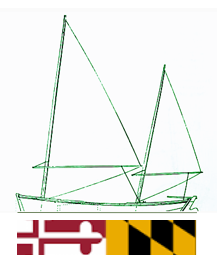
These records are found in the online catalog of The Mariners’ Museum and Park in Newport News, Virginia. Uncurated search results are presented to give researchers and interested readers an idea of whether the museum’s archives contain information about this vessel and whether it may be worthwhile to visit the museum’s catalog search page for further investigation. Uncurated results may be inaccurate or incomplete.
Search mode: Exact Name. Search phrase(s): "Severn". Results returned: 43. Results displayed in this table: 43.
Use these buttons to send uncurated search results to your own app or text document for further research. First, check the box for any row, or click "Select All" then uncheck any rows. Then click "Show Selections". You can then copy your selections from the text box and past them into your app.
| Fetch? | Row ID | Media | Date | Vessel | Place | Related Places | Inscription/Marks | Subject | Notes | Archive Number |
|---|---|---|---|---|---|---|---|---|---|---|
| 1 | No image URL. | Severn Princess. | LB88874 | |||||||
| 2 | No image URL. | Severn River | Bores (Tidal phenomena). | The Severn Bore __ __by Fred Rowbotham ; foreword by Peter Scott | LB13099 | |||||
| 3 | No image URL. | Severn River (Wales and England). | Working the Severn. | LB56502 | ||||||
| 4 | No image URL. | Severn | P0001.011/01-2741 | |||||||
| 5 | No image URL. | Thames and Severn Canal–History | Inland waterways histories | Canals–History. Great Britain | The Thames & Severn Canal __ __foreword by Charles Hadfield | LB23104 | ||||
| 6 | No image URL. | The Severn trow. | LB80801 | |||||||
| 7 | 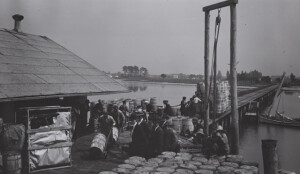 | 1909-1910 | A photograph of the Old Dominion steamboat wharf. | P0001.008/01-609#PH2171 | ||||||
| 8 | No image URL. | Trent Canal; Trent River Valley (Ont.) | Boats and boating | Cruising the Trent-Severn Waterway __ __endpaper maps by Lloyd Scott | LB15035 | |||||
| 9 | No image URL. | Fort Severn: the battery at Windmill point. | LB62221 | |||||||
| 10 | No image URL. | Severn, Virginia | P0001.008/01-609 | |||||||
| 11 | 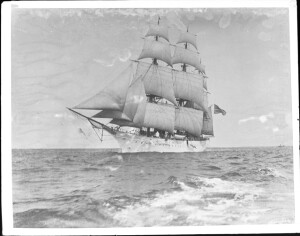 | This undated photograph is of the bark named either Chesapeake II or Severn. The vessel changed its name in 1905. Title devised by Library staff. | P0008/02-#147 | |||||||
| 12 | 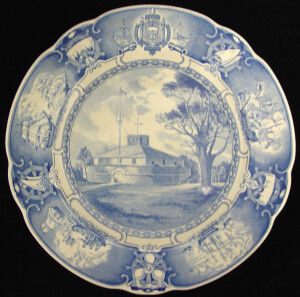 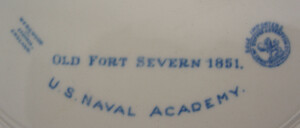 | SHORT DESCRIPTION: White plate with blue transfer from Wedgwood's U.S. Naval Academy plates made from the 1930's through the 1960's. This plate is from the original issue that started in 1934. A stamp on this plate indicates manufacture in June 1935. The center of the front has an image of Old Fort Severn and around the rim are images of ships. | CL5173 | |||||||
| 13 | 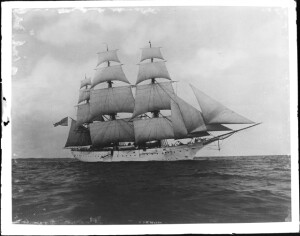 | 1905 | Copyright symbol 1905 by Enrique Muller; U.S.S. Severn | Forward starboard quarter up close at water level. Vessel is underway on full sail with the ships crew on deck. The vessel is painted in white and there is a large Ensign flying from the gaff. | P0008/02-#074 | |||||
| 14 | No image URL. | Contains black-and-white photographs. | MS0817/01-23.249 | |||||||
| 15 | No image URL. | Romano-British boat from the shores of the Severn estuary. | LB91419 | |||||||
| 16 | No image URL. | Temperley Line.; Severn (Steamship : 1870). | Temperley Line - Severn - photographs | MS0528/01-179.18 | ||||||
| 17 | No image URL. | Great Britain. Royal Navy–History | Great Britain–History, Naval.; Severn River (Wales and England). | Warships–History. Great Britain; Warships–History. England and Wales | The warships of Gloucester (H.M. Ships Gloucester, 1654-1941), and, The Severn and naval defence __ __by Victor F.L. Millard and T. Hannam-Clark | LB36527 | ||||
| 18 | No image URL. | Ferries–Severn River (Wales and England). | Ferry at Hampton Loade on the River Severn, Shropshire, England and its method of operation. | LB98179 | ||||||
| 19 | No image URL. | Pl. | LB62233 | |||||||
| 20 | No image URL. | Cruising on the Severn Waterway : __Stourport to Sharpness Docks, with the Worcester & Birmingham Canal and the Stratford-upon-Avon Canal from King's Norton Junction to Kingswood Junction. | LB107675 | |||||||
| 21 | No image URL. | Severn River (Md.) | Stream conservation–Maryland–Severn River; Water pollution–Maryland–Severn River; Stream ecology–Maryland–Severn River | Tough love | LB104078 | |||||
| 22 | 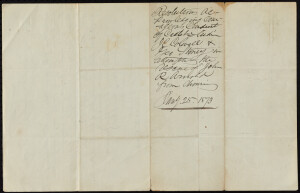 | 1/25/1873 | Severn River (Md.). | Drowning. | Two-page resolution from the citizens of the third district in Anne Arundel County, Maryland, commending John L. Worden and two midshipmen from the Naval Academy. The resolution is signed by John H. Duvall, Chair of the committee of citizens. Midshipmen John Colwell and George Stoney are commended for their roles in attempting to rescue John R. Arnold from drowning while crossing the frozen Severn River. Worden and the officers of the academy are credited with providing assistance to the family of John R. Arnold in the aftermath of the tragedy. | MS0016/01-001.22#01 | ||||
| 23 | 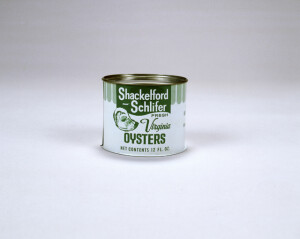 | SHORT DESCRIPTION: Metal twelve ounce can with a pattern of light green around top with darker green in center front showing company name/ banner and back center offering recipes. Front also has image of an oyster in left center flanked by "fresh Virginia OYSTERS". | CL28462 | |||||||
| 24 | No image URL. | Severn (Cruiser) | World War, 1914-1918–Naval operations. | "Severn's" saga | LB6564 | |||||
| 25 | No image URL. | Illus. | LB60336 | |||||||
| 26 | 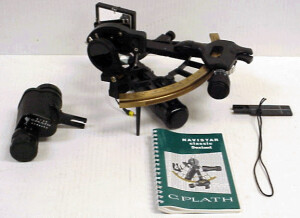 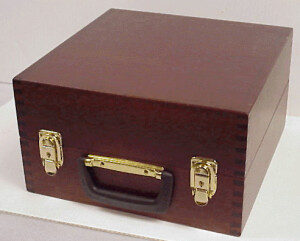 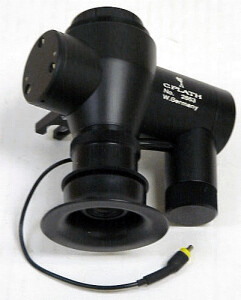 | SHORT DESCRIPTION: Navistar classic sextant No. 63631 by C. Plath. Ladder frame design, black lacquer finish. Bright brass limb with helical gear cut for quick release mechanism. Radius 6-1/4" Index arm with quick release. Scale divided on brass from -5 to 125 in whole degrees. Drum micrometer reads to 0.1 arc minute. 2-1/4" diameter clear glass plate whole horizon mirror with tilt prism. "Opt-Level" 6 x 30 monocular with built-in astigmatizer lens. Illuminated bubble artificial horizon. Four index and three horizon glass shades. 3 volt, two dry cell illumination with battery case in the handle. Formed foam in square mahogany case, with instructions for placing in case, and printed instructions for use. In separate box 1998.39.47B an artificial bubble horizon by the C. Plath division of Litton Marine Systems. INVENTORY: 1 wooden box, 1 telescope, 1 bubble attachment, 1 cardboard box - there are four (4) component parts. | CL26222 | |||||||
| 27 | 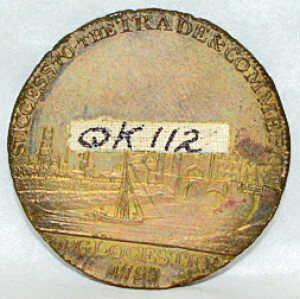 | SHORT DESCRIPTION: Token commemorating the Gloucester and Berkeley Canal. The obverse contains a view of the gateway and bridge over the Severn with a ship in foreground and a distant view of the city. The reverse shows a starboard broadside view of a full-rigged ship under sail. LABEL COPY: Halfpenny Token Gloucester and Berkeley Canal Act obtained 1793 (Obverse) Success to the Trade and Commerce of Glocester 1797 - (Reverse) QK 112 | CL3821 | |||||||
| 28 | 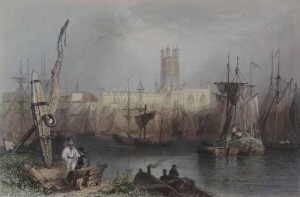 | SHORT DESCRIPTION: The image depicts the harbor of Gloucester in England. In the background is the Gloucester Cathedral and other buildings. In the foreground numerous ships are docked in the River Severn, one with a large cargo and several men aboard. In the left foreground there are several men standing on the banks of the river talking near a large anchor and a cart. Another man sits in a small boat with his back to the viewer, possibly smoking. NOTES: The image is from before page 89 of volume 2 of “The Ports, Harbours, Watering-Places, and Coast Scenery of Great Britain," published by George Virtue in 1842. (TMMP Library DA625 .F49 Rare) The book was first published in 1838 by Charles Tilt with descriptions by William Andrew Chatto. It was then published several times in 1839 and 1842 by George Virtue, and later after 1855 by Virtue & Co. under George’s son, James S. Virtue. The name also changed slightly, but kept the "Ports, Harbours, and Watering Places" part of the title. The books that the Virtues published kept Chatto’s descriptions for the first volume, but they expanded the book to two volumes. William Beattie wrote the text for the new second volume and an appendix added to the end of the volume 1. NOTES: From the end of the 1842 edition of Volume 2: “In taking leave of these two Volumes, illustrating the Ports, Harbours, Watering-places, and Coast Scenery of Great Britain, a few words of explanation appear necessary. The work was originally commenced by Messrs. Finden [William and Edward], and for some time carried on with all the taste and spirit characteristic of these distinguished Artists. But the remuneration accruing from the sale being found inadequate to defray the expenses incurred in its production, it was offered to the present Publisher, who readily saw the improvements of which it was susceptible and became the purchaser. Arrangements were then made for its continuation. Mr. BARTLETT, whose illustrations are so familiarly and favourably known to the Public, set out on a tour of observation along the northern coasts of England and Scotland; and, after visiting every locality indicated, returned with a portfolio of drawings taken on the spot. These were immediately placed in the hands of eminent engravers; a re-issue and continuation of the work were announced; and it is gratifying to state, that the reception which it has since met with from the Public has been most liberal. With regard to the letterpress descriptions, I beg it to be expressly understood that the labours of my pen have been confined to the Second Volume and the Appendix of Vol. 1. The First Volume was written under the signature W.A.C. - prior to my connexion with the work; and, in justice to that author, I feel it at once a duty and a pleasure to conclude the work with this statement. William Beattie, M.D.” January 1842 J. Rickerby, printer, Sherbourn Lane NOTES: Construction of the Gloucester Cathedral began in 1089 and it was consecrated as St. Peter’s Abbey in 1100. As with most buildings this age it has changed over time. The abbey was dissolved in 1540, but just a year later King Henry VIII designated it as the cathedral for the Diocese of Gloucester. Excerpt: “Caer-Glow, or the “Fair City” of the ancient Britons, is a name happily characteristic of Gloucester. The beauty of its situation, on a gentle eminence overlooking the Severn, where its splendid cathedral and numerous public buildings; and latterly the tide of prosperity occasioned by the vast improvements in regard to its inland part, present a combination of attractions for which it would be difficult to find a parallel in the British Provinces. Commercial enterprise has now a fixed residence in the place, and within the last ten years has made great and important advances in the several departments of foreign and domestic industry. The port of Gloucester and the Cathedral, of which the accompanying plate gives a most correct and interesting view, are the two principle features; and to these in accordance with the plan of the work, our descriptive text will be more strictly confined. The port is of great antiquity,- so much so as to have existed as an inland harbour long prior to any written document of the place,- but it is only of late years that ships of burden could be anchored in the city basin. A century ago, as recorded in the Magna Britannia, the Port of Gloucester had a large quay and wharf on the banks of the river, very commodious for trade to which belonged a great custom house, with officers proper for it; but the business was not great, as the city of Bristol, only a few miles distant, had engrossed all the foreign trade in this part of the country. The vessels which at the period in question navigated the Severn were generally small trading-craft, of between fifty and two hundred tons burden, so that Gloucester was deprived of all those advantages which have been so happily secured to it by modern enterprise and improvement. Of these, the Berkley ship-canal is a noble monument. By the vast facilities thus afforded, the commerce of Gloucester has enjoyed a course of uninterrupted prosperity and bids fair to eclipse even Bristol itself in the extent and ramifications of its still increasing trade. Ships of heavy burden are now safely moored in the basin and discharge those cargoes in the heart of the city which had formerly to be transshipped to Bristol, and conveyed to their destination by means of barges and lighter.” | CL16421 | |||||||
| 29 | No image URL. | Gloucester (Ship-of-the-line : 1745); Severn (Ship-of-the-line : 1747); Sphinx (Frigate : 1748); Seaford (Frigate : 1754); Mary (Yacht : 1677); Royal George (Ship : 1756); Nottingham (Ship-of-the-line : 1703); Experiment (Frigate : 1740); Foudroyant (Ship-of-the-line : 1758); Neptune (Ship-of-the-line : 1757); Scorpion (Sloop : 1746); Porcupine (Sloop : 1746); Gosport (Frigate : 1741); Pegase (Ship-of-the-line : 1782); Victory (Ship-of-the-line : 1782); Captain (Ship-of-the-line : 1787); Alarm (Frigate : 1758) | Of men and ships : __old Jarvie, Earl St. Vincent | LB103383 | ||||||
| 30 | 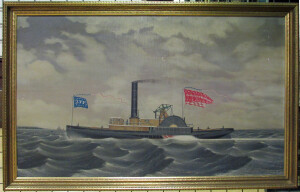 | VESSEL INFORMATION- VESSEL NAME: JAMES F. FREEBORN VESSEL HISTORY: Wood side-wheel steamer tug built in 1862 at Williamsburg, New York (later Greenpoint, Long Island), by Lawrence and Foulkes. Purchased on August 18, 1863 from Richard Squires by the U.S. Navy Department and renamed USS NANSEMOND. Sold on August 22, 1865 to the U.S. treasury Department and taken into the U.S. Revenue Mariner as the USRC W. H. CRAWFORD. She was commissioned until 1896 patrolling the Chesapeake Bay, based at Baltimore. After government service was used around Baltimore as the GENERAL J.A. DUMONT. In 1897 she was again withdrawn from active service and later sold out. In 1901 she appeared as the GEN'L J.A. DUMONT at Baltimore as an excursion steamer for service on the Chesapeake, where she remained until burned while in winter quarters on December 22, 1914, at Severn Side, Maryland. Alternate vessel names: (1) JAMES F. FREEBORN (1862-1863); (2) USS NANSEMOND (1863-1865); (3) USRC W.H. CRAWFORD (1865-1897); (4) GENERAL J.A. DUMONT (1897-1914). | CL24420 | |||||||
| 31 | 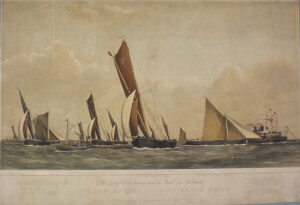 | LEADING VESSELS...IN THE SEVENTH ANNUAL SAILING BARGE MATCH, JULY 20TH, 1869 | CL20404 | |||||||
| 32 | 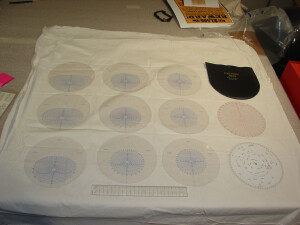 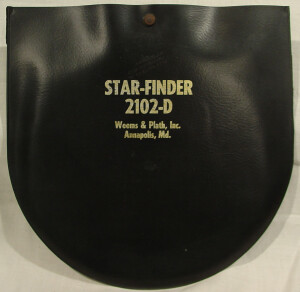  | NOTES: Star-Finder 2101-D and identifier for latitudes 5°, 15°, 25°, 35°, 45°, 55°, 65°, 75° and 85°. An instruction sheet is included. Text provided by Weems & Plath states that No. 2102-D Star Finder and Identifier is "basic principle employed by Rude and Collins with later modifications". The Star Finder and Identifier is designed to portray graphically the approximate altitude and azimuth of the 57 numbered stars listed in the Air and Nautical Almanacs and any other celestial bodies that may be plotted on the star base. The complete unit consists of 9 altitude-azimuth plates (blue-line), meridian angle-declination template (red-line), dual star base (black-line) and this instruction sheet, all enclosed in a container. The instructions show how to find or identify celestial bodies, how to plot the sun, moon, planets and stars, and how to determine the meridian angle. | CL29293 | |||||||
| 33 | 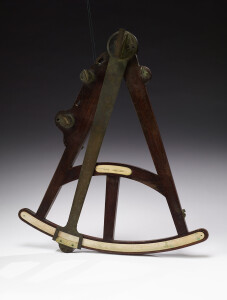 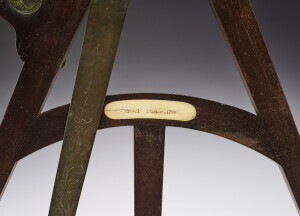 | SHORT DESCRIPTION: Probably British by unknown maker. Rosewood or mahogany frame. Brass sheet index arm engraved with floral design. Type A ivory vernier to one arc minute. Front sight peep with one hole. Back sight one hole peep sight and mirror. Ivory plate stamped with "Pearl Durkee 1792". NOTES: Silvering on index mirror nearly gone, most of horizon mirror gone, back sight mirror in poor condition. Scale loose, nailed in place. [J. Willoz-Egnor, 4/30/2019] Using the date of the octant [1792] and the birth dates of men named Pearl Durkee, I have built a potential career history for the captain who used this octant. There is no guarantee, however, that it is fully correct as the details provided in the period sources I found are quite limited. I have tried to rely solely on original documents and newspapers from the period and not on the details provided by genealogical researchers as I am not convinced they haven’t mixed up the careers of two different men of the same name. I believe the captain who used our octant (2019.01.06) was based in Baltimore, as the dates on the men who lived in Nova Scotia seem to be too late when considering the date of this octant. It is possible that our Pearl Durkee was born in Nova Scotia in 1769 and moved to Baltimore, but I couldn’t find any period source to corroborate that supposition (other than genealogical work by others that was not backed up by original source material). Potential career path for Captain Pearl Durkee of Baltimore: Around 1795 to circa 1803: Betsey and Patty [also saw one source that said Betsey & Peggy] 1804: Schooner Severn Approximately 1809 to 1810: Schooner Spy Approximately 1810 to 1811: Schooner Kemp Approximately 1811 to 1812 [seized by British]: Schooner Arrow 1812: Schooner Chasseur [never made it out of port] May 26, 1814: Unidentified schooner (measuring 124-63/95) recorded to be built by Thomas Kemp for Pearl Durkee. ? 1817 to 1823: Schooner Fox, sunk in 1823 1819? Dorchester, brig, Pearl Durkee, master. [George Knox, David Smith, and Baltimore Insurance were awarded $21,000 under the February 22, 1819, treaty with Spain.] 1824: Schooner Pearl | CL30952 | |||||||
| 34 | 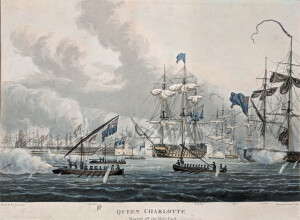 | SHORT DESCRIPTION: Aquatint showing the bombardment of Algiers by British warships and gunboats on August 27, 1816. The fortifications on the shore are in flames from the attack. The image shows oar propelled gun boats, firing towards the left, and a rocket launching boat in the foreground and center. The ship of the line Queen Charlotte is anchored by the stern at the end of the mole at the center. Her sails are brailed up. To her right is the HMS Heron and HMS Leander, behind a cloud of smoke. NOTES: Text from Voyages and Travels of Lord Brassey: from 1862 to 1894, Volume 1: The next great event in the history of Algiers was the bombardment of the city by the British fleet, under Lord Exmouth. This attack forms a brilliant episode in the history of the navy; and, in order to give as accurate a narrative as possible, I will simply transcribe, from 'James's Naval History,' a sketch of those features of the battle which are best calculated to interest. The events out of which the attack originated England are thus explained. On May 23, 1816, at Bona, near Algiers, the crews of between 300 and 400 small vessels engaged in the coral fishery, while on their way to celebrate mass at the festival of Ascension, were barbarously massacred by a band of 2,000 Turkish, Levantine, and Moorish troops. These atrocities, perpetrated on defenseless Christians, having at length roused the indignation of England, an expedition of suitable magnitude was prepared to act against the forts and shipping of Algiers; and the command was entrusted to a most able officer, Admiral Lord Exmouth, who had already, a short time before, compelled the Dey of Tunis to sign a treaty for the abolition of Christian slavery, and to restore 1,792 slaves to freedom. On July 28, a fleet, consisting of nineteen men-of-war (five of which were line-of-battle ships, and four frigates), set sail from Plymouth. On August 9, Lord Exmouth anchored in Gibraltar Bay, and found lying there a Dutch squadron of five frigates and a corvette. On being apprised of the object of Lord Exmouth's expedition, the Dutch Vice Admiral, Van de Capellen, solicited and obtained fleet leave to co-operate in the attack. In the meantime, the Algerines had been preparing for the threatened assault. The whole of the guns mounted for the defense of the city of Algiers, on its sea and land frontiers, are represented to have exceeded 1,000; and 4,000 men had been marched down from the interior to strengthen the garrison of the city. The fleet did not gain sight of Algiers until daybreak on August 27. The ships at this time lying nearly becalmed, Lord Exmouth took the opportunity of dispatching a lieutenant, in one of the 'Queen Charlotte's' boats, towed by the 'Severn,' to demand of the Dey certain conditions, of which the following is the substance. The abolition of Christian slavery; the delivery of all Christian slaves in the kingdom of Algiers; the restitution of all the money that had recently been exacted for redemption of Neapolitan and Sardinian slaves; peace with the King of the Netherlands; and immediate liberation of the British Consul. At 9 P.M., a calm retarding the progress of the frigate, the boat, by signal from the 'Queen Charlotte,' pulled for the shore, carrying a flag of truce. At 11 A.M., on arriving opposite to the mole, the boat was met by one from the shore, in which was the captain of the port. The formal demand was presented, and an answer promised in two hours. Meanwhile a breeze having sprung up from the sea, the fleet stood into the bay, and lay to, about a mile from the city. At 2 P.M., no answer returning, Lieutenant Burgess hoisted the signal to that effect, and pulled out towards the 'Severn.' The 'Queen Charlotte' immediately asked, by signal, if all the ships were ready. Almost at the same moment every ship had the affirmative flag at her mast-head, and the fleet bore up to the attack in the prescribed order. At 2.35 P.M. the 'Queen Charlotte' anchored, with springs, about 50 yards from the mole-head. The vessels of the fleet took up their stations ahead and astern of the flagship, abreast of the mole, and the action commenced. Such were the precision and destructive effect of the 'Queen Charlotte's' fire that her third broadside levelled the south end of the mole to its foundation. She then sprang her broadside, until it bore upon the batteries over the town-gate, leading into the mole. Here gun after gun came tumbling over the battlements; and when the last fell, which was just as the artillerymen were in the act of discharging it, one of the Algerine chiefs leaped upon the ruined parapet, and shook his drawn scimitar at the ship. The excellent position of the 'Leander' and her animated fire very soon cut to pieces the Algerine gunboats and row-galleys, and their intention of boarding the nearest British ships was entirely frustrated. Towards 4 P.m. the 'Leander ' ceased firing, by order of the Admiral, to allow the Algerine frigate, moored across the mole at the distance of about 160 yards from the 'Queen Charlotte,' to be set on fire. The blaze was, so to speak, electrical; and Lord Exmouth testified his approbation by telegraphing to the fleet, 'Infallible.' At 7 P.M. the 'Leander,' being greatly cut up by the Fish Market battery and others on her starboard bow, ran out a hawser to the 'Severn,' and brought her broadside to bear upon them. About this time, by the incessant and well-directed fire of the mortar, gun, and rocket-boats, all the vessels within the harbor were in flames. The conflagration speedily communicated to the arsenal and storehouses on the mole; and the city also, in several parts, was set on fire by the on fire shells from the bomb-vessels. Down to 10 P.M. the whole of the fleet kept up a tremendous fire upon the town and forts; when, the upper tiers of the batteries on the mole being in a state of dilapidation, the fire from the lower tiers was nearly silenced, and the ammunition of the attacking ships reduced to a helpless minimum, the 'Queen Charlotte' cut her cables and springs, Fleet move and stood out before a light breeze which, fortunately for the British, had just sprung up from the land. The remaining British ships, by order of the Admiral, began moving also; but, owing to their disabled state, they made very slow progress; and the 'Leander,' 'Superb,' and 'Impregnable' suffered much, in consequence, from the raking fire of a fort at the upper angle of the city. Before 2 A.M. every British and Dutch ship had come to, out of reach of shot or shell, the blaze of the Algerine fleet and storehouses illuminating the whole bay, and greatly assisting the vessels in picking an anchorage. As if to add to the awful grandeur of the scene, the elements ablaze began their war as soon as the ships and batteries had ended theirs. For nearly three hours the lightning and thunder were incessant, and rain poured down in torrents. The total loss, on the part of the allies, was 141 killed and 742 wounded. The loss, in killed and wounded, on the part of the Algerines, amounted, as represented by some accounts, to 4,000 men, and according to others, to nearly 7,000. As soon as daybreak enabled him, Lord Exmouth dispatched Lieutenant Burgess with a flag of truce, and a note to the Dey, repeating the demands of the preceding afternoon. On the following day Captain Brisbane, of the 'Queen Charlotte,' went on shore; and, by the aid of the interpreter, Mr. Salame, held a conference with the Dey. Several further interviews took place, and the final results were the delivery to the British of upwards of 1,200 Christian slaves, with an engagement (of questionable value) to abolish the practice of slave-making in future; the restoration of 382,500 dollars, for slaves redeemed by Naples and Sicily; peace with the King of the Netherlands; and a payment of 30,000 dollars to the British Consul for the destruction of his effects, together with a public apology to him, before the ministers and officers of the palace, in terms dictated by Captain Brisbane, for the detention of his person. | CL17693 | |||||||
| 35 | 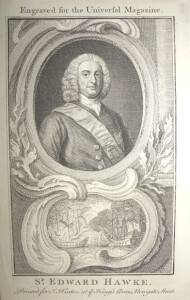 | NOTES: (R. Wyatt, 5/3/2001) From: Universal Magazine, The Universal Magazine of Knowledge and Pleasure was a monthly publication, June 1747 to December 1803. It contained news, letters, debates, poetry, music, biography, history, geography and other arts and sciences. Making use of plates, maps, and diagrams, it was prepared for the instruction and entertainment of the gentry, merchants, farmers, and tradesmen. (TMM Library AP3 U 58 C) SEE: LE 761, LE 767, LE 775, LE 849, LE 867, LE 1010, LE 1051 NOTES: Sir Edward Hawke (1705-1781) British admiral. He entered the navy in 1720 and first saw fighting as commander of a ship in the battle of Toulon (1744). He was promoted (1747) to rear admiral and in the same year inflicted a major defeat on a French squadron off La Rochelle. In the Seven Years War, Hawke relieved (1756) Admiral John Byng as commander in the Mediterranean and was appointed an admiral. In Nov., 1759, after blockading the French ports in the Bay of Biscay for six months, he won a decisive victory over the French fleet in Quiberon Bay. His victory averted the danger of a French invasion of Great Britain. He served (1766-71) as first lord of the admiralty and was raised (1776) to the peerage. During his long career Hawke did much to improve conditions in the fleet. [See biography by R. F. Mackay (1965).] NOTES: The Universal magazine. v.27. June 1760, Image found on page: 82: The above plate is a decorative portrait of Sir Edward Hawke. There is a small image represented below him of two ships in battle, the left of which is on fire. This small image likely represents the battle detailed in the text between British and French ships on October 14, 1747. The account below details his decorated naval career. [pg 82] As we have always been attentive, in our Magazine, to record whatever was memorable and praise-worthy in the Lives of illustrious Men, more especially of our own Countrymen, whose signal Services hace rendered dear to us, we therefore cannot omit making honourable Mention of Sir EDWARD HAWKE, by here presenting out readers with his Head finely engraved, and the following Summary of his principal Transactions. In the year 1734, Mr. Hawke, having been bred to the sea from a very early age, was made Captain of his Majesty’s sloop the Wolfe, and from this time took rank in the navy. In the engagement in the Mediterranean in 1743-4, he commanded the Berwick, broke the line in Admiral Rowley’s division, and took the Podor, (the only ship taken) was broke for his bravery, and restored by the King. In 1747, at a general promotion of Flag officers, he was made Rear admiral of the Blue. The same year the Lords of the Admiralty having received information that a very large fleet of merchant-ships, bound from the ports of France to the West-Indies, were collecting together at the isle of Aix, and that a strong squadron of ships of war had sailed from Brest to escort them, they made the necessary preparations to intercept them; and ordered out a fleet from Plymouth on this destination, under the command of Rear-admiral Hawke. This fleet set sail from Plymouth on the 9th of August, and continued cruising off the coast of Brittany, in expectation of intercepting the French. On the 14th of October, at seven in the morning, the Edinburgh made a signal for seeing seven sail in the south-east quarter, upon which Rear-admiral Hawke immediately made the signal for all the fleet to chase; about eight he saw a great number of ships, so crouded that he could not count them; but at ten he made a signal for forming a line of battle a-head. The French Commodore, when he first saw the British squadron in the horizon, crouding after him, he took them for some of his own fleet; but, when he discovered what they were, he threw out the signal for the merchant-men to make the best of their way, and at the same time made a signal for the men of war to form the line of battle; the Intrepide, Trident, an Terrible composed the van, the Tonant and Monarque the center, and the Severn, Fogueux and Neptune the rear. It was of the last importance that this line should form immediately; but, the preservation of the merchant-ships being the principal object, it was necessary to leave intervals, so that before they could all pass through a considerable time was elapsed, during which admiral Hawke made his dispositions; and, discovering that the escape of the convoy was their chief intention, made the signal for chasing before the line was formed; and in half an hour, observing that the head-most ships were within a proper distance, he made the signal to engage, which was immediately obeyed. The Lion and Princess Louisa began the engagement about a quarter before twelve, passing through a terrible fire, from the rear to the van of the French, and were followed by the rest of the ships as they came up; the Lion, Louisa, Tilbury, Eagle, Windsor, and Yarmouth behaved with the greatest intrepidity, though the French received them with the utmost bravery. Rear-admiral Hawke received several fires at a distance, before he could get near enough to engage the Severn, which he soon silenced, and left to be taken up by the frigates a-stern. Then, perceiving the Eagle and Edinburgh to be somewhat disabled by [pg 83] the Tonant, he kept as near the wind as possible, in order to assist them; but the attempt was frustrated by the Eagle’s falling twice on board the Devonshire, having had her wheel shot to pieces, all the men at it killed, and all her braces and bowlings gone, which forced the Rear-admiral to leeward, and prevented his attacking either the Monarque or the Tonant, within any distance to do execution. He however attempted both, especially the latter; but while he was engaged with her the breechings of all the lower deck guns of the Devonshire broke, and the guns flew fore and aft, which obliged her to shoot a-head, because her upper and quarter deck guns could not reach the Tonant. Capt. Harland, in the Tilbury, observing that the Tonant fired single guns at the Devonshire, with a view to dismast her, tacked and stood in between her and the Devonshire, and gave her a very smart fire. By this time the new breechings were all seized on board the Devonshire, and she was got almost along-side of the Trident of 64 guns, which the Rear-admiral immediately engaged, and soon silenced by a very brisk fire; but, observing the Kent, which appeared to have received little or no damage, at some distance astern of the Tonant, he flung out the signal for Capt. Fox to make sail a-head and engage her. The Admiral also, seeing some of his squadron at that time not so closely engaged as he could wish, made the signal for coming to a close engagement; and soon after the Devonshire got within musket shot of the Terrible. In the mean time, Capt. Saunders lay two hours closely engaged with the Neptune, which has 100 men killed, and 140 wounded, and had lost almost all her masts, before she struck, which she did about four o’clock. The mOnarque, Fougeus, and Severn surrendered, about the same time; the Trident struck about five to Admiral Hawke, as did also the Terrible about seven. The Tonant and Intrepide escaped, during the night, to a small French port, where they repaired their damages, and returned to Brest, having lost 200 men. As soon as the Terrible, Monarque, Neptune, Trident, Fougeux, and Severn had struck, and it beginning to grow very dark, Admiral Hawke thought proper to bring to for that night; and, as it was not possible to dispatch any ships after the convoy, he manned and victualled the Weazle sloop and sent her express to Commodore Legge, who commanded the squadron stationed about the Leeward islands, with an account of what had happened, bu which means tens of the merchant-men were taken. The Rear-admiral arrived, with his six prizes, at Spithead on the 31st of October. In this action Capt. Moore, now COmmodore Moore, lately stationed in the West-Indies, commanded the Devonshire, the Admiral’s own ship; and his behaviour was so gallant, that the Admiral sent him to England with news of his victory, and a particular recommendation. At the same time, he preferred a complaint against Capt. Fox for misbehaviour, by which two of the enemy’s principal ships escaped. Capt. Fox was afterwards tried and suspended. In November the same year he was made Knight of the Bath, as a reward for the signal service he had done his country in this action; and in the December following he was chosen Member of Parliament for Portsmouth. In the year 1748 he was sent on a cruise in the Bay, where he fell in with the Magnanime, one of the finest ships in the French navy, which was taken by the Nottingham, and has since been employed against the enemy with great advantage. The Admiral was also this year chosen an Ender Brother of the Trinity-house, an honour seldom conferred but as the reward of merit. He was soon after appointed to command a squadron which sailed on the 16th of January, and returned the 25th of July following. In the year 1749 he commanded the squadron that was appointed to convoy the transports that carried the colony of new settlers to Nova Scotia. He was also this year solemnly installed in his knighthood of the Bath. On the 6th of July he sat as President of a Court-martial that was held on board the Invincible, at Portsmouth, for the trial of Samuel Couchman, the First Lieutenant, and John Morgan, Lieutenant of the mariners, and several other Officers and seamen, for a conspiracy to seize his Majesty’s ship the Chesterfield, and carry her off from the coast of Africa, with a piratical intent. At this Court-martial, Couchman and morgan were sentenced to be shot; and the carpenter, carpenter’s mate, the quarter-master, and one seaman to be hanged: On all whom the sentence was afterwards executed. He was also the same year appointed President of a court-martial on board the Monarch man of war at Portsmouth, for the trial of an Officer of rank for disobeying of orders, of which he was convicted, and suspended for a year. In the month of December 1749 he sat in a Court-martial [pg. 84] held on board the Charlotte yacht at Deptford, for inquiring into the conduct of Rear-admiral Knowles, in an action between a fleet under his command and a Spanish Squadron, off Hispanola; when it appearing, that the Admiral attacked six ships with four, when he might have attacked six, and that when, after an hour’s fight within pistol-shot, his ship was disabled, he staid on board till she was refitted, and then carried her down again to the charge, instead of going aboard another ship immediately, he was reprimanded. He also sat at a Court-martial held at Deptford in February 1750, for the trial of Capt. Holmes and Capt. Powlet, who were accused by admiral Knowles for misbehaviour in the same action, when they were both, particularly Capt. Holmes, acquitted with great honour. On the 15th of August 1750 he was visited, on board the Monarch man of war, then riding at Spithead, by their Royal Highnesses the Prince and Princess of Wales, with several of their children, an honor which no admiral had ever received before. On the 3d of December the same year he was appointed President of the Court-martial for the trial of Admiral Griffin, for misconduct off Pondicherry; who, being found guilty of negligence, he was suspended from his rank as a Flag-officer during his majesty’s pleasure, but was afterwards restored. On June 16, 1756, on advice of Admiral Byng’s misbehaviour, he sailed from Portsmouth, with orders to supersede and send him home under arrest; and commanded the remainder of that year in the Mediterranean, during which time his Lady died. On the 24th of July 1757 he was appointed to command the squadron that was lent, in conjunction with some forces under the command of Sir John Mordaunt, against Rochfort, on the coast of France. This expedition not being successful, the Admiral, though he did all that could be done on his part, experienced the caprice of popular favour; for, at his return, instead of being received as usual, with ringing of bells and acclamations, he was insulted by a dumb peal. On the 22d of October 1757 he sailed again for the coast of France, and was afterwards joined by Admiral Boscawen; but, being detained by contrary winds, he did not arrive a second time in the road of Basque will the 3d of April, 1758, when he fell in with a large convoy of French ships, laden with provisions for North America, which he ran on shore, and so many of them were disabled that the rest could not proceed on their voyage, so that the service intended was wholly frustrated. On the 18th of May 1759 he sailed with a very strong fleet from Portsmouth, to observe the French squadron at Brest. He afterwards received the Prince on board, and kept his station till the 12th of October following, when he was driven from it by the violence of the wind, and in the beginning of November put into Plymouth; but on the 14th of the same month he sailed again, and on the 20th defeated the French fleet commanded by Mons. Conflans, for a particular account of which the reader is referred to VOL XXV, page 314, &c. For his service he received the thanks of the House of Commons, and his Majesty settled upon him and his sons, abd the survivor of them, 2000 l. per an | CL15773 | |||||||
| 36 | 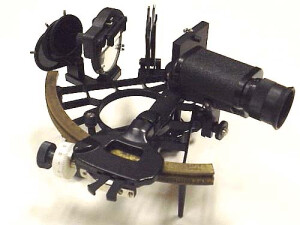 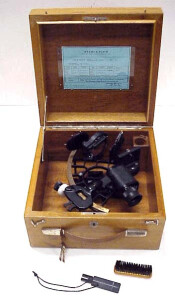 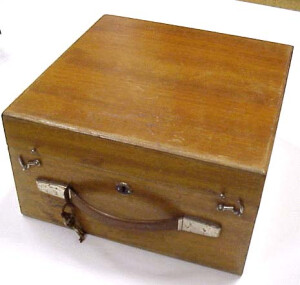 | SHORT DESCRIPTION: Weems & Plath Sextant with Prism Level II, by Davis Instruments with original corrections certificate and book entitled, "The Book of the Sextant",by G.D. Dunlap & H.H. Schufeldt and published by Weems & Plath, Inc. The objects are encased in a wooden box. Also included in the box are the owner's manual for the Prism Level II and the original invoice for the Sextant from the W.T. Brownley Co. NOTES: Shirley and Trevor HIll have been avid sailors since they moved to Virginia 36 years ago. They began sailing the Chesapeake Bay area 35 years ago on 25 foot sailboat named TREVELY and 10 years later purchased a 30 ft. fiberglass sailboat with a fin and skeg, named SANTEE. The second boat was built in Sweden and was purchased because the boat could handle the sailing conditions of the open Atlantic fairly easily. They have sailed to ports stretching from Cape Canaveral to Nova Scotia, including the Intercoastal Waterway, but have concentrated most of their trips in the Virginia Capes region. Most of theinstruments being donated were purchased in the 1970's for use on their ocean voyages. Except for some minor corrosion on the weights and gauges of the Walker log the instrument are in pristine condiiton. One note of interest is that the spinners of the log are covered with numerous scratches and gouges which Mrs. Hill says were caused by sharks. Every once in a while the shark would win the tug of war with the log which is why they are always carried two spinners. One instrument, the artificial horizon, has never been used. It was originally purchased by Mr. Hill to practice using the sextant when he was at home on land, but for some reason most of his practice sessions always ended up at sea during one of their voyages! The Hills used the Realistic Timekube to intercept the time signal sent out from Colorado. Accurate knowledge of the time was necessary in order to use the sextnat effectively. The Hills also used a SeaSpot RDF which they were unable to locate, but would like to donate to the museum once it is found. ADDITIONAL INFORMATION: See object file for more information on Davis Instruments. INVENTORY: Wooden box and book - there are two (2) component parts. | CL27464 | |||||||
| 37 | 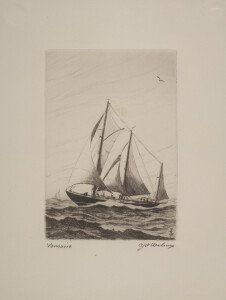 | NOTES: Charles J. A. Wilson was born in 1880 in Glasgow, Scotland. He came to America as an infant and in his teens moved to Newton, Massachusetts. Wilson was a prolific, self-taught, marine artist who gained much of his experience from working in the Boston shipyards. He worked as an artist for Bethlehem Shipbuilding in East Boston, etching their ships from blueprints. During the World War I, Wilson spent two years in France. After the war he was commissioned to paint and etch American ships and marine views. During World War II, Wilson worked in Boston as an official Coast Guard artist. He was a member of the Boston Society of Printmakers, and exhibited with Pennsylvania Academy of the Fine Arts, Society of American Etchers and the Currier Gallery. VESSEL INFORMATION- VESSEL NAME: VAMARIE BUILD DATE: 1933 SHIPOWNER: MAKAROFF, VADIM S. SHIPOWNER LOCATION: NEW YORK, LONG ISLAND, OYSTER BAY DIMENSIONS: Racing Yacht: tonnage 45 (gross register); length 70'2"; beam 15'3"; draft10'4"; complement 14 VESSEL HISTORY: [History by Robert J. Cressman, 27 June 2022] Vamarie, a ketch-rigged ocean racing yacht designed by Jasper Morgan of Cox & Stevens, Inc., was built in 1933 at Bremen, Germany, by Abeking & Rasmussen, for S. Vadim Makaroff of Oyster Bay, Long Island. With Makaroff at the helm, the slim racing yacht participated in nine ocean races between 1934 and 1936, sailing over 30,000 miles. Donated to the Regiment of Midshipmen at the United States Naval Academy, Annapolis, Md., on 11 November 1936, Vamarie served as the Navy's racing yacht in local races in Chesapeake Bay during the racing season in 1937. The following summer, on 22 June 1938, Vamarie was entered in the race from Newport, R.I., to Bermuda marking the first time that the yacht returned to "blue water" sailing in two years. Four days later, the yacht, commanded by Capt. John F. Shafroth, came in 18th out of 22 vessels in her class and 29th out of the 44 total entries. Vamarie participated in further local races into 1939. On 8 March 1940 she was classified IX-47. The yacht was officially assigned to the Naval Academy on 22 October 1940 and was placed in service on 10 November 1944. She operated under the aegis of the Severn River Naval Command until authorized for disposal on 24 February 1955. Stricken from the Navy List on 22 June 1955, Vamarie was broken up in December of the same year. | CL15987 | |||||||
| 38 | 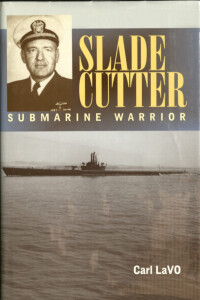 | United States. Navy–Officers–Biography. | World War, 1939-1945–Naval operations, American.; World War, 1939-1945–Naval operations–Submarine.; World War, 1939-1945–Campaigns–Pacific Area. | Slade Cutter, submarine warrior __ __Carl LaVO | LB107011 | |||||
| 39 | 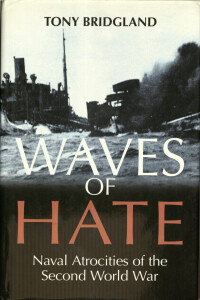 | World War, 1939-1945–Naval operations.; World War, 1939-1945–Atrocities. | Waves of hate : __naval atrocities of the Second World War __by Tony Bridgland | LB107278 | ||||||
| 40 | 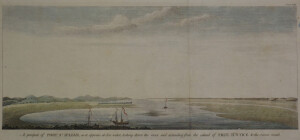 | SHORT DESCRIPTION: Hand-colored engraving titled "A Prospect of Port St. Julian as it appears at low water....". The image shows a view of Port St. Julian (Puerto San Julián) looking up Saint Julian Bay (Baie de Saint Julian, which Anson frequently refers to as a river) towards True Justice island (Isla de la Justicia) and the waters leading to mouth of the bay on the South Atlantic Ocean (Argentine Sea). The scene depicts the bay at low tide. Two small vessels are anchored on the shoreline to the left of center. At the center a small vessel is sailing up the bay towards the South Atlantic. The image appears between pages 68 and 69 of George Anson's, A Voyage Round the World, in the years MDCCXL, I, II, III, IV, which was compiled by Richard Walker, chaplain of the Centurion, from Anson's papers (TMMP call#G420.A5 W2 1749 Rare). The book was printed for Walter by John and Paul Knapton, Ludgate Street, London in 1748. Some plates are signed by: James Mason, John Miller (Joh. Sebastian Müller), Richard William Seale and John Wood. It follows a map and image of the Port St. Julian area. NOTES: From 1740-1744, during the War of Jenkins' Ear (1739-1748) and War of the Austrian Succession (1740-1748), Commodore George Anson led a squadron of eight ships (warships: Centurion, Gloucester, Severn, Pearl, Wager, Tryal; merchant ships: Anna, Industry) on a mission to disrupt or capture the Pacific Ocean possessions of the Spanish Empire (1740-1744). The squadron (or what was left of it) returned to Britain in 1744 by way of China having completed a circumnavigation of the globe. In 1743 the squadron captured the 'Nuestra Senora de la Covadonga', a Manila Galleon, a Spanish trading ship that made one or two round trip trading voyages per year between Mexico City and the ports of Acapulco and Manila bringing Chinese and other Asian luxury goods to the Americas. During the voyage, surgeon James Lind became one of the first people to test and promote citrus fruits as a cure to scurvy. Despite this the expedition suffered terrible losses from disease, with only 188 of the original 1854 men surviving. The squadron made a stop in the Port St. Julian area after Tryal was dismasted in a storm, but the squadron found no trees or fresh water and only small quantities of salt. NOTES: Text discussing Anson's stop at Port St. Julian beginning around the 17th/18th/18th of February 1741: [from page 61]...had it not been for the necessity we were under of refitting the Tryal [whose masts were rotten], this piece of intelligence [a Spanish squadron was in the area] would have prevented our making any stay at St. Julian's; but as it was impossible for that sloop to proceed round the Cape in her present condition, some stay there was inevitable, and therefore the same evening we came to an anchor again in twenty-five fathom of water, the bottom a mixture of mud and sand, and the high hummock bearing SW by W. And weighing at nine in the morning, we soon after sent the two cutters belonging to the Centurion and Severn in shore, to discover the harbour of St. Julian, while the ships kept standing along the [page 62] coast, at about a distance of a league from the land. At six o'clock we anchored in the bay of St. Julian, in nineteen fathom, the bottom muddy ground with sand, the northermost land in sight bearing N and by E, the southermost S.1/2E, and the high hummock, to which Sir John Narborough formerly gave the name of Wood's Mount, W.S.W., Soon after, the cutter returned on board having discovered the harbour, which did not appear to us in our situation, the northermost point shutting in upon the southermost, and in appearance closing the entrance. [discussion of two views provided to facilitate knowledge of the coast for future navigators] Being come to an anchor in this bay of St. Julian, principally with a view of refitting the Tryal, the Carpenters were immediately employed in that business, and continued so during our whole stay at the place. The Tryal's main-mast having been carried away about twelve feet below the cap, they contrived to make the remaining part of the mast serve again; and the Wager was ordered to supply her with a spare main top-mast, which the Carpenters converted into a new fore-mast. [a discussion follows that the lowering of the sloop's rigging is probably what helped the ship survive the storms the squadron suffered while passing Cape Horn]. [page 63] This bay of St. Julian, where we are now at anchor, being a convenient rendezvous, in case of separation, for all cruisers bound to the southward, and the whole coast of Patagonia, from the river of Plate to the Streights of Magellan, lying nearly parallel to their usual route, a short account of the singularity of this country, with a particular description of port St. Julian, may perhaps be neither unacceptable to the curious, nor unworthy the attention of future navigators, [page 64] as some of them, by unforeseen accidents, may be obliged to run in with the land, and to make some stay on this coast...[provides a description of the coastline of Patagonia and mentions Sir John Narborough wintering in St. Julian in 1670, Narborough reports the land was destitute of wood but abounded with pasture and the Spanish cattle that range on it]. [page 68, mentions that they saw no inhabitants of the country during their stay] [from page 69]...account with a short description of the harbour of St. Julian, the general form of which may be conceived from the annexed sketch. But it must be remembered, that the bar, which is there marked at the entrance, is often shifting and has many holes in it. The tide flows here N and S, and at full and change, rises four fathom. We, on our first arrival here, sent an officer on shore to the salt-pond, marked (D) in the plan, in order to procure a quantity of salt for the use of the squadron, Sir John Narborough having observed, when he was here, that the salt produced in the place was very white and good, and that in February there was enough of it to fill a thousand ships; but our Officer returned with a sample which was very bad, and he told us, that even of this there was but little to be got; I suppose the weather had been more rainy than ordinary, and had destroyed it. To give the reader a better idea of this port, and of the adjacent country, to which the whole coast I have described bears a great resemblance, I have inserted two accurate views, one of them representing the appearance of the country, when looking up the river; the other, being a view taken from the same spot, but the observer is now supposed to turn round opposite to his former situation, and consequently this is a representation of the appearance of the country down the river, betwixt the station of the observer, and the river's mouth. [from page 70, once Tryal was refitted, a council of war was held on board Centurion on February 24th [1741]....the Tryal sloop compleated, the squadron weighed on Friday the 27th of February, at seven in the morning, and stood to the sea. NOTES: A new edition with introductory notes by G.S. Laird Clowes in 1928 contains forty-two reproductions from the original that Richard Walker compiled from George Anson's papers and other materials in 1748. (TMM Library G420. A5W2 1928) | CL10603 | |||||||
| 41 | 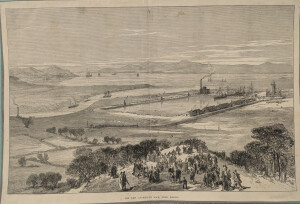 | SHORT DESCRIPTION: Black and white engraving titled 'The New Avonmouth Dock, Near Bristol,' published in the March 3, 1877 issue of The Illustrated London News (No. 1964, Vol. LXX, between pages 212-213). The print shows the new docks at Avonmouth, where the River Avon meets the Bristol Channel. There is a crowd of people in the foreground celebrating the opening in 1877. There is a train, the Bristol Port Railway and Pier, heading toward the dockyard, and several ships are entering the docks from the River Avon. There is a lighthouse near the entrance to the docks, and the lighthouse and ships are decorated with flags for the celebration. NOTES: The text supporting the article appears on page 199: AVONMOUTH DOCK, BRISTOL . A new dock, constructed for the port of Bristol on the shore of the Bristol Channel, at the mouth of the river Avon, a few miles from that ancient and important commercial city, was formally opened, last Saturday, by the Mayor and Corporation. This work has been eight or nine years in progress, being actually commenced in August, 1868. The total cost of dock, lock, warehouses, machinery, and plant is something like £600,000 or £200,000 more than the original capital of the company. The basin of the dock contains a clear area of six-teen acres, being 1400 ft. long and 500 ft. wide, and has a depth of water at ordinary tides of 31 ft. 3 in, while a depth of 26 ft. can always be maintained. The dock gates are the highest in the world, having a depth of no less than 49 ft. and a width of 70 ft. The lock is 600 ft. long and 70 ft wide, wh a depth of water over 40 ft. The engineer was Mr. Brunlees, C.E., and the contractor Mr. Lawrence, of King's Lynn. The apparatus for opening and closing the gates, and for supplying the six large cranes which surround the dock with motivo power, was provided by the firm of Sir W. Armstrong and Company, of Newcastle. The dock is in direct com-munication with the Great Western and Midland Rail way systems, by means of the Port and Pier Railway, which runs from Avonmouth along the side of of the river to the Sus-pension Bridge, whence the Clifton Joint Extension, under Durdham Down, runs into the Great Western at the Bristol terminus and the Midland at Fishponds. Within the past ten ycars the river Avon has had its bed deepened and its dan-gerous angles cut off, and new basins have been provided by the city authorities at the cost of nearly half a million sterling: and a dock quite as large as the Avonmouth Dock will be opened next year at Portishead, about twelve miles below Bristol, to which the Corporation, having a large area of property near the docks, contributed £100,000. By next year, therefore, a million and a half will have been spent in the endeavour to attract a share of the large ocean-going steanı trade to the West of England port, and in the hope of recovering the position Bristol once held of the second city in the kingdom. The opening ceremony, on Saturday, was simple but effective. The Mayor and Corporation, High Sheriff, Dock Company's directors, and several hundreds of invited guests left Cumberland Basin in the Irish steamer Juno, which, as it entered the new dock, cut in two a line of blue ribbon, as a signal that all obstructions had been removed. At this moment the rifle band struck up the National Anthem, a salvo of artillery was fired from the dock bank, and was replied to by the guns of the training gun-boat Fervent, mauned by the volunteer naval artillery, and by the Formidable training-ahip and the battery at Portishead. The Juno then steamed round the dock, and the Mayor made a short speech declaring the dock opened. Other speeches were also delivered. In the evening the Mayor, Mr. George Edwards, entertained the Corporation, directors, and a select party at a banquet in the hall of the Merchant Venturers. It was then announced that the Great Western Railway Company were going to advertise at once for tenders for the completion of the tunnel under the Severn, and that they contemplated making Bristol the centre of their system of railways. NOTES: Nantucket native William F. Macy learned the printer’s trade at Nantucket’s newspaper, ‘The Inquirer and Mirror.’ After going to the mainland he worked in several printing shops around Boston and was appointed as the first instructor in printing at the Lyman School for Boys in Westboro, Massachusetts. Later Macy opened an insurance agency in Boston. Throughout this time he continued studying Nantucket history and frequently contributed articles to ‘The Inquirer and Mirror’ (signing his articles "Yorick"). Around 1912, in collaboration with Anna Gardner Fish and Roland Bunker Hussey, Macy issued the first edition of the "Nantucket Scrap Basket". He arranged for a second edition of this publication in 1932. In 1915, Mr. Macy prepared and published "The Story of Old Nantucket," a condensed history of Nantucket (reprinted in 1931). He was a founder and one time president of "The Sons and Daughters of Nantucket." In 1924, Macy was appointed President of the Nantucket Historical Association and served until his death in 1935. During this time Edward F. Sanderson approached the Association about receiving his collection of whaling paraphernalia with the purpose of establishing a whaling museum on Nantucket. When he returned to Nantucket in 1928 Mr. Macy purchased the old American House property, on the corner of Orange Street and Martins Lane, and built the house now standing there. This became Macy’s headquarters during his decade of planning, raising money and finally establishing the Nantucket Whaling Museum which opened its doors on July 24, 1930. | CL10723 | |||||||
| 42 | 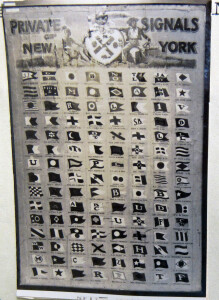 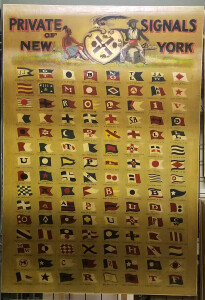 | NOTES: For additional information see Kenneth Blume's "Historical Dictionary of the U.S. Maritime Industry" Scott & Morrell were merchants and shipping agents who were active in the 1830s and 1840s. The company appears in newspapers as Scott & Shapter at 72 and 74 South Street as early as 1829, then as Scott, Shapter, & Morrell in 1833. In 1837 the newspaper advertisements list their company as Scott & Morrell. E.D. Hurlbut & Co. was founded in 1825 and operated three lines by 1850 (Apalachicola, Mobile, and Pensacola). They were located at 84 South Street in and also added service to Havre and Antwerp. Goodhue & Co. began in 1808 as Goodhue & Swett, became Goodhue & Co. at 44 South Street by 1816. The company dissolved in 1861. Duberceare should be spelled Duberceau. Edgar Duberceau and L. Bouquet appear as merchants in the New York City Directories and Wilson's Business Directory of New York City from the mid 1840s through the 1850s. Their address was 28 Old Slip and later 142 Pearl. Napier Johnson & Co. owned the ship, Sunny South, which was designed by George Steers who also designed the yacht America. (From "The Clipper Ship Era: An Epitome of Famous American and British Clipper Ships, Their Owners, Builders, Commanders, and Crews 1843-1869" by Arthur Hamilton Clark, 1912) Grinnel Minturn & Co. should be spelled Grinnell. They operated a blue swallowtail line to Liverpool from 1822 to 1880, a red swallowtail line to London from 1823 to 1880, and a California Line starting in 1851 with the Gold Rush. The company began as Fish & Grinnell around 1810, and became Grinnell & Minturn in 1832. (See Whaling Museum of New Bedford and also "The Old Merchants of New York City" by Joseph Alfred Scoville, 1863) Spofford & Tillitson should be spelled Spofford & Tillotson according to Arthur Hamilton Clark's book and newspapers from the 1870s. Zeraga should be spelled Zerega. From pages 752-753 of Henry Hall's 1895 book "America's Successful Men of Affairs," Augustus Zerega was born in 1803 in Martinique. He moved to America around 1835, then started his Z Line of clipper sailing ships. He retired in 1855 and died in 1888. His most famous ship is possibly the Antarctic, which saved several hundred passengers and U.S. service members from the SS San Francisco, which sank off the coast of the Carolinas after a storm in December 1853. 1852 New York City Directory lists the company as shipping merchants at 56 South. Kermitt & Carrow should be spelled Kermit & Carow. Robert Kermit started a packet ship business with his brother in 1817, going to and from Liverpool. After his brother's death he joined with Isaac Carow to create Kermit & Carow, then married Isaac's daughter Ann Eliza in 1832. Ann Eliza's brother, Charles Carow, joined the firm after his father's death. Charles' daughter, Edith Kermit Carow Roosevelt, was the wife of President Theodore Roosevelt. Howland & Aspinall should be spelled Howland & Aspinwall. Founded in 1826 as G.G. & S. Howland by Gardiner Green and Samuel Shaw Howland (Mayflower descendants). In 1832 William H. Aspinwall (a brother-in-law) joined the firm and it became Howland & Aspinwall between 1836-1837. The Howlands retired in the 1850s but the company continued through 1895 in name only. (See Kenneth Blume's book "Historical Dictionary of the U.S. Maritime Industry") Post & Philips should be spelled Post & Phillips. The New York City Directory of 1843 lists them as agents at 68 South Street. W. & J.T. Topscott should be spelled W. & J.T. Tapscott. William and James Tapscott were agents with William located in Dublin and Liverpool, and James in New York. Their newspaper advertisements list them at 43 Peck Slip, next door to 151 South Street, in 1838. A large fire destroyed their buildings in 1850 but they rebuilt. Whetmore & Cryder should be spelled Wetmore & Cryder. From “Rites of Passages: The Wetmores of Chateau Sur Mer” William Samuel Wetmore had several partnerships but “revisited his partnership” with John Cryder of Philadelphia in 1844 to form Wetmore & Cryder. Wetmore retired from that in 1847. Johnson & Lowden appear in Longworth's American Almanac as merchants at 86 Wall Street in 1841 and in Annual Report of the New York Association for Improving the Condition of the Poor in 1857. Siffken & Ironside were merchants at 56 Broadway when a fire destroyed the block in 1845. Francis E. Siffken died in 1880, his obituary (New York Times, 12 February 1880, page 2) states that the company survived the panic of 1857 and lasted until Mr. Siffken retired in 1870. Bucklin & Crane began in the mid-1840s with Thomas Peck Bucklin and Isaac B. Crane. The company owned the ship Comet, and lasted through the 1880s. (See bucklinsociety.net) William Whitlock, Jr.'s father was a shipowner and Jr. joined the company in 1812, then created his own company in 1825. This lasted until the Civil War. David Ogden was an agent for a line known as the St. George Line (for the St. George cross on their house flag) and occasionally as the Red Cross Line. Appears to have been most active in the 1850s. N.L. & G. Griswold: Nathaniel Lynde Griswold and George Griswold started the company in 1822, then continued through the California Gold Rush. The John Griswold/London Line began in 1823 by John Griswold, also known as Griswold's Black X Line for the house flag. The line ran between New York and London until 1867. Barstow & Pope began with Henry W. Barstow, William P. Barstow, and Joshua L. Pope; Longworth’s American Almanac lists them as commercial merchants at 98 Pine in 1841 and 1842. Goulding’s New York City Directory of 1877 lists them at 26 Burling Slip. Mason & Thompson were active in the 1840s and 1850s as merchants and shippers with business in South America, the Caribbean, and San Francisco. Taylor & Merrill’s Black Star Line was owned by Robert L. Taylor and Nathaniel W. Merrill and operated between the 1830s and 1850s between New York and Liverpool and in the China Trade. They also worked in the slave trade to Savannah in the 1840s. Williams & Guion: Stephen Barker Guion and John Stanton Williams founded the company in 1843 when Guion was 23. They worked in the transatlantic trade and started a packet line called Black Star Line. In 1852 Guion moved to Liverpool to start Guion & Co., agents for Williams & Guion. In 1866 they added their first steamship. When John S. Williams died in 1876 the company became Guion & Co. in 1883. M. & R. Maury: Matthew and younger brother Rutson Maury started the company in 1832 but changed in 1841 to Maury Brothers. Matthew served on the Chamber of Commerce from 1838 until his death in 1877. In 1835 M. & R. Maury was located at 35 Broad Street. Fox & Livingston: Francis D. Fox and Mortimer Livingston, the company lasted from 1820s to 1850s, was named Bolton, Fox, & Livingston when first established. They were merchants, traders, and shipowners. Moses Taylor worked for Howland & Aspinwall until he turned 26 in 1832 and started his own company. His offices were on South Street but a fire destroyed his offices but rebuilt and became very successful. He was involved in Boss Tweed and Tammany Hall, and what is now Citibank. Josiah Macy & Son was founded in 1822 by William H. Macy and began using this name when his father, Josiah Macy, joined the firm in 1828. As William's brothers grew older they joined the firm and the name became Josiah Macy & Sons, which lasted until Josiah Macy Sr. retired in 1853 and the name became Josiah Macy's Sons. (From William H. Macy's obituary, The Boston Globe, 20 May 1887, Page 4) They filed for bankruptcy in 1900. Laidlaw & Whitlock: (from “Biographical Register of Saint Andrew's Society of the State of New York” page 152) John Laidlaw was involved in commission business in 1822 at 106 Front Street, then in 1826 he was at 78 South Street where he was an agent for a line of packet ships to New Orleans. Around 1831 he started Scott & Laidlaw with John Scott but Scott left soon and in 1835 the company became John Laidlaw & Co. and in 1840 it became Laidlaw & Whitlock. He was alone in business by 1842 at 175 Front Street. Samuel Thompson & Nephew (From Mystic Seaport finding aid) Samuel Thompson started the company in 1825 and it was under his name until 1845 when it became Samuel Thompson & Nephew. It became Samuel Thompson’s Nephew & Co. in 1870. They worked as agents for numerous vessels and worked in the immigrant trade in the 1840s and 1850s. It also managed the Black Star Line of Liverpool packets. Samuel is related to Jeremiah Thompson who helped start the Black Ball Line in 1817. Union Line/Havre began in the 1820s as the Havre Line, then the Old Havre Line, then merged with other companies to form the Union Line. George Sutton operated a line of ships to Charleston (not Charlestown as the sign reads). He built several homes in New York City, at least one of which still stands at 143 Allen Street. A.A. Low & Brothers was Abiel Abbot Low whose firm specialized in the China trade and owned the ship Hoqua. In 1840 he started his own company after learning the trade, worked with his brother Josiah Orne Low. (From Low Family Papers at Peabody Essex Museum) Chas. R. Green stood for Charles R. Green, who was a junior partner in George Green & Brother by the 1830s. George died in 1847 and Charles took over, moving the company to Wall Street in 1849. (From “The American Clipper Ship, 1845-1920”) J. Howard & Son was Joseph Howard and his son, John Tasker Howard. They moved to Brooklyn from Salem, MA in 1827. (From “Some Memories of John Tasker Howard, 1808-1888, and His Wife, Susan Taylor Raymond, 1812-1906” 1909) C.W. & A. Thomas was Cornelius W. and Augustus Thomas. They began working with their father Thomas Thomas, then from 1838-1847 the company was T. Thomas & Co., and from 1850-1852 it was C.W. & A. Thomas, then it became A. Thomas & Co. (From NYC Landmarks Preservation Commission May 15, 2007) B. Aymar & Co. was Benjamin Aymar and his brother John Q. Aymar. They started the company in 1821 and moved to 34 South Street in 1825. According to the 1870 publication "The Old Merchants of New York City," volume 3, the company was still in business. Taylor & Rich is probably Taylor & Ritch, though it occasionally appears as Taylor & Hitch/Hich. William C. Taylor and Henry Lockwood Ritch both appear in federal census records as merchants or seaman, and in New York City directories at 136 Front Street. Taylor & Ritch owned the DeWitt Clinton, a ship later owned by H.L. Rich & Co. that wrecked in March 1860 (see New York Times article). H.L. Rich & Co. also owned the ship Jacob A. Westervelt (burned in 1860), named after a famous shipbuilder at the time, and possibly the inspiration for the letters J.A. W on the company flag. Henry L. Ritch continues as a grocer at 136 Front Street through at least 1865, H.L. Ritch & Co. appears as merchants at 84 Beaver Street in the 1873/74 directory but disappears by 1876. Henry Lockwood Ritch died in 1875. | CL12617 | |||||||
| 43 |  | NOTES: Private signals of the Merchants of New York. Painted board signed C. Newton. NOTES: For additional information see Kenneth Blume's "Historical Dictionary of the U.S. Maritime Industry" Scott & Morrell were merchants and shipping agents who were active in the 1830s and 1840s. The company appears in newspapers as Scott & Shapter at 72 and 74 South Street as early as 1829, then as Scott, Shapter, & Morrell in 1833. In 1837 the newspaper advertisements list their company as Scott & Morrell. E.D. Hurlbut & Co. was founded in 1825 and operated three lines by 1850 (Apalachicola, Mobile, and Pensacola). They were located at 84 South Street in and also added service to Havre and Antwerp. Goodhue & Co. began in 1808 as Goodhue & Swett, became Goodhue & Co. at 44 South Street by 1816. The company dissolved in 1861. Duberceare should be spelled Duberceau. Edgar Duberceau and L. Bouquet appear as merchants in the New York City Directories and Wilson's Business Directory of New York City from the mid 1840s through the 1850s. Their address was 28 Old Slip and later 142 Pearl. Napier Johnson & Co. owned the ship, Sunny South, which was designed by George Steers who also designed the yacht America. (From "The Clipper Ship Era: An Epitome of Famous American and British Clipper Ships, Their Owners, Builders, Commanders, and Crews 1843-1869" by Arthur Hamilton Clark, 1912) Grinnel Minturn & Co. should be spelled Grinnell. They operated a blue swallowtail line to Liverpool from 1822 to 1880, a red swallowtail line to London from 1823 to 1880, and a California Line starting in 1851 with the Gold Rush. The company began as Fish & Grinnell around 1810, and became Grinnell & Minturn in 1832. (See Whaling Museum of New Bedford and also "The Old Merchants of New York City" by Joseph Alfred Scoville, 1863) Spofford & Tillitson should be spelled Spofford & Tillotson according to Arthur Hamilton Clark's book and newspapers from the 1870s. Zeraga should be spelled Zerega. From pages 752-753 of Henry Hall's 1895 book "America's Successful Men of Affairs," Augustus Zerega was born in 1803 in Martinique. He moved to America around 1835, then started his Z Line of clipper sailing ships. He retired in 1855 and died in 1888. His most famous ship is possibly the Antarctic, which saved several hundred passengers and U.S. service members from the SS San Francisco, which sank off the coast of the Carolinas after a storm in December 1853. 1852 New York City Directory lists the company as shipping merchants at 56 South. Kermitt & Carrow should be spelled Kermit & Carow. Robert Kermit started a packet ship business with his brother in 1817, going to and from Liverpool. After his brother's death he joined with Isaac Carow to create Kermit & Carow, then married Isaac's daughter Ann Eliza in 1832. Ann Eliza's brother, Charles Carow, joined the firm after his father's death. Charles' daughter, Edith Kermit Carow Roosevelt, was the wife of President Theodore Roosevelt. Howland & Aspinall should be spelled Howland & Aspinwall. Founded in 1826 as G.G. & S. Howland by Gardiner Green and Samuel Shaw Howland (Mayflower descendants). In 1832 William H. Aspinwall (a brother-in-law) joined the firm and it became Howland & Aspinwall between 1836-1837. The Howlands retired in the 1850s but the company continued through 1895 in name only. (See Kenneth Blume's book "Historical Dictionary of the U.S. Maritime Industry") Post & Philips should be spelled Post & Phillips. The New York City Directory of 1843 lists them as agents at 68 South Street. W. & J.T. Topscott should be spelled W. & J.T. Tapscott. William and James Tapscott were agents with William located in Dublin and Liverpool, and James in New York. Their newspaper advertisements list them at 43 Peck Slip, next door to 151 South Street, in 1838. A large fire destroyed their buildings in 1850 but they rebuilt. Edward Noltenius & Parvenstad should be Pavenstedt. Whetmore & Cryder should be spelled Wetmore & Cryder. From “Rites of Passages: The Wetmores of Chateau Sur Mer” William Samuel Wetmore had several partnerships but “revisited his partnership” with John Cryder of Philadelphia in 1844 to form Wetmore & Cryder. Wetmore retired from that in 1847. Johnson & Lowden appear in Longworth's American Almanac as merchants at 86 Wall Street in 1841 and in Annual Report of the New York Association for Improving the Condition of the Poor in 1857. Siffken & Ironside were merchants at 56 Broadway when a fire destroyed the block in 1845. Francis E. Siffken died in 1880, his obituary (New York Times, 12 February 1880, page 2) states that the company survived the panic of 1857 and lasted until Mr. Siffken retired in 1870. Bucklin & Crane began in the mid-1840s with Thomas Peck Bucklin and Isaac B. Crane. The company owned the ship Comet, and lasted through the 1880s. (See bucklinsociety.net) William Whitlock, Jr.'s father was a shipowner and Jr. joined the company in 1812, then created his own company in 1825. This lasted until the Civil War. David Ogden was an agent for a line known as the St. George Line (for the St. George cross on their house flag) and occasionally as the Red Cross Line. Appears to have been most active in the 1850s. N.L. & G. Griswold: Nathaniel Lynde Griswold and George Griswold started the company in 1822, then continued through the California Gold Rush. The John Griswold/London Line began in 1823 by John Griswold, also known as Griswold's Black X Line for the house flag. The line ran between New York and London until 1867. Barstow & Pope began with Henry W. Barstow, William P. Barstow, and Joshua L. Pope; Longworth’s American Almanac lists them as commercial merchants at 98 Pine in 1841 and 1842. Goulding’s New York City Directory of 1877 lists them at 26 Burling Slip. Mason & Thompson were active in the 1840s and 1850s as merchants and shippers with business in South America, the Caribbean, and San Francisco. Taylor & Merrill’s Black Star Line was owned by Robert L. Taylor and Nathaniel W. Merrill and operated between the 1830s and 1850s between New York and Liverpool and in the China Trade. They also worked in the slave trade to Savannah in the 1840s. Williams & Guion: Stephen Barker Guion and John Stanton Williams founded the company in 1843 when Guion was 23. They worked in the transatlantic trade and started a packet line called Black Star Line. In 1852 Guion moved to Liverpool to start Guion & Co., agents for Williams & Guion. In 1866 they added their first steamship. When John S. Williams died in 1876 the company became Guion & Co. in 1883. M. & R. Maury: Matthew and younger brother Rutson Maury started the company in 1832 but changed in 1841 to Maury Brothers. Matthew served on the Chamber of Commerce from 1838 until his death in 1877. In 1835 M. & R. Maury was located at 35 Broad Street. Fox & Livingston: Francis D. Fox and Mortimer Livingston, the company lasted from 1820s to 1850s, was named Bolton, Fox, & Livingston when first established. They were merchants, traders, and shipowners. Moses Taylor worked for Howland & Aspinwall until he turned 26 in 1832 and started his own company. His offices were on South Street but a fire destroyed his offices but rebuilt and became very successful. He was involved in Boss Tweed and Tammany Hall, and what is now Citibank. Josiah Macy & Son was founded in 1822 by William H. Macy and began using this name when his father, Josiah Macy, joined the firm in 1828. As William's brothers grew older they joined the firm and the name became Josiah Macy & Sons, which lasted until Josiah Macy Sr. retired in 1853 and the name became Josiah Macy's Sons. (From William H. Macy's obituary, The Boston Globe, 20 May 1887, Page 4) They filed for bankruptcy in 1900. Laidlaw & Whitlock: (from “Biographical Register of Saint Andrew's Society of the State of New York” page 152) John Laidlaw was involved in commission business in 1822 at 106 Front Street, then in 1826 he was at 78 South Street where he was an agent for a line of packet ships to New Orleans. Around 1831 he started Scott & Laidlaw with John Scott but Scott left soon and in 1835 the company became John Laidlaw & Co. and in 1840 it became Laidlaw & Whitlock. He was alone in business by 1842 at 175 Front Street. Samuel Thompson & Nephew (From Mystic Seaport finding aid) Samuel Thompson started the company in 1825 and it was under his name until 1845 when it became Samuel Thompson & Nephew. It became Samuel Thompson’s Nephew & Co. in 1870. They worked as agents for numerous vessels and worked in the immigrant trade in the 1840s and 1850s. It also managed the Black Star Line of Liverpool packets. Samuel is related to Jeremiah Thompson who helped start the Black Ball Line in 1817. Union Line/Havre began in the 1820s as the Havre Line, then the Old Havre Line, then merged with other companies to form the Union Line. George Sutton operated a line of ships to Charleston (not Charlestown as the sign reads). He built several homes in New York City, at least one of which still stands at 143 Allen Street. A.A. Low & Brothers was Abiel Abbot Low whose firm specialized in the China trade and owned the ship Hoqua. In 1840 he started his own company after learning the trade, worked with his brother Josiah Orne Low. (From Low Family Papers at Peabody Essex Museum) Chas. R. Green stood for Charles R. Green, who was a junior partner in George Green & Brother by the 1830s. George died in 1847 and Charles took over, moving the company to Wall Street in 1849. (From “The American Clipper Ship, 1845-1920”) J. Howard & Son was Joseph Howard and his son, John Tasker Howard. They moved to Brooklyn from Salem, MA in 1827. (From “Some Memories of John Tasker Howard, 1808-1888, and His Wife, Susan Taylor Raymond, 1812-1906” 1909) C.W. & A. Thomas was Cornelius W. and Augustus Thomas. They began working with their father Thomas Thomas, then from 1838-1847 the company was T. Thomas & Co., and from 1850-1852 it was C.W. & A. Thomas, then it became A. Thomas & Co. (From NYC Landmarks Preservation Commission May 15, 2007) B. Aymar & Co. was Benjamin Aymar and his brother John Q. Aymar. They started the company in 1821 and moved to 34 South Street in 1825. According to the 1870 publication "The Old Merchants of New York City," volume 3, the company was still in business. Taylor & Rich is probably Taylor & Ritch, though it occasionally appears as Taylor & Hitch/Hich. William C. Taylor and Henry Lockwood Ritch both appear in federal census records as merchants or seaman, and in New York City directories at 136 Front Street. Taylor & Ritch owned the DeWitt Clinton, a ship later owned by H.L. Rich & Co. that wrecked in March 1860 (see New York Times article). H.L. Rich & Co. also owned the ship Jacob A. Westervelt (burned in 1860), named after a famous shipbuilder at the time, and possibly the inspiration for the letters J.A. W on the company flag. Henry L. Ritch continues as a grocer at 136 Front Street through at least 1865, H.L. Ritch & Co. appears as merchants at 84 Beaver Street in the 1873/74 directory but disappears by 1876. Henry Lockwood Ritch died in 1875. | CL12611 |
Created 2026 by Don Barker, CBMM volunteer, for the Chesapeake Shipbuilding Project. shipbuilding@sailingworkboats.es